A qualified interpreter protects testimony, informed consent, and the attorney-client relationship in a personal injury case. Plaintiffs with limited English proficiency typically need interpreting at intake, medical visits, depositions, independent medical exams, mediation, and trial. Firms that plan for it early avoid transcript disputes, delays, and costly rework.
One mistranslated word can follow a plaintiff for years. If a client says “I fell” and the interpreter renders it as “I was pushed,” the record now carries a version of events the client never gave. Hiring a legal interpreter for personal injury cases is a case-protection step, and it matters most for the Spanish-speaking plaintiffs, law firms, and medical providers who work together on these claims every day.
What Gets Lost When a Client and Attorney Do Not Share a Language?
Language gaps rarely announce themselves. A client may nod, say “yes,” and still miss the meaning of a retainer term, a treatment plan, or a question about prior injuries. Short answers that sound cooperative can hide real confusion.
The damage builds over time. Vague descriptions of pain at intake become weak medical chronologies. Misunderstood consent forms raise questions about whether the client truly agreed. A client who feels unheard may also stop calling the office, which strains the relationship and slows the case. A trained interpreter closes these gaps before they harden into problems.
Where Does a Legal Interpreter for Personal Injury Cases Come In?
A plaintiff who does not speak English fluently needs an interpreter at every point where words become evidence or create obligations. That includes the first intake call, every medical appointment, and every formal proceeding. Treating interpreting as a one-time need at trial leaves most of the case exposed.
These are the moments where firms and providers typically need language support:
- Intake and signing the fee agreement, where informed consent depends on real understanding
- Medical visits, where symptom descriptions end up in the records that later support damages
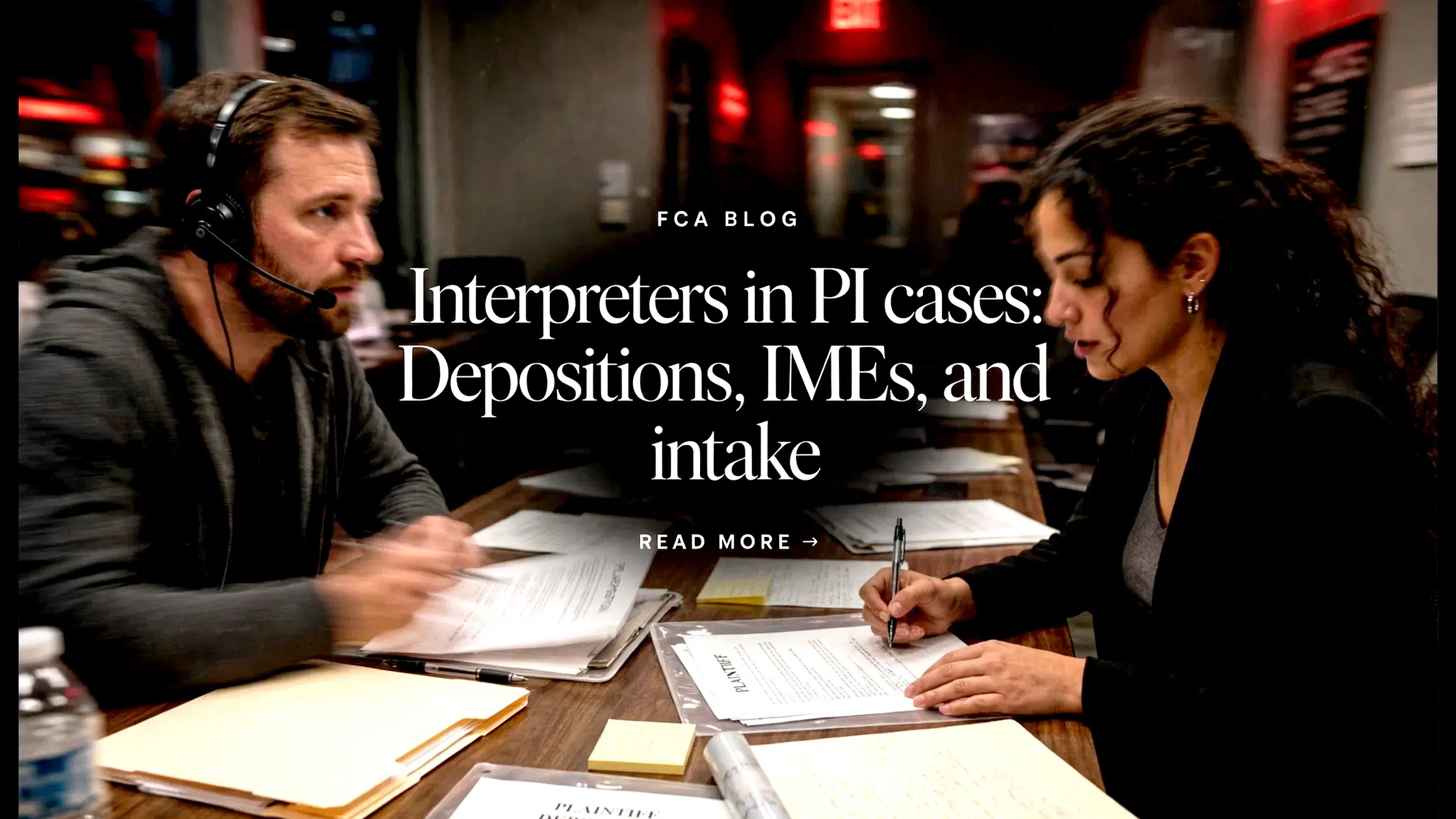
- Depositions, where every answer becomes sworn testimony
- Independent medical exams, where the examiner’s notes capture what the plaintiff said
- Mediation, where the client must grasp each offer and counteroffer
- Trial, where the interpreter becomes part of the official record
Medical providers carry a special responsibility here. Chart notes written from a poorly interpreted visit can contradict the plaintiff’s later testimony, and the defense will notice.
Why Is a Family Member Not the Safest Choice?
A family member can interpret in a pinch, but it is rarely the safest option for anything that creates a record. Relatives lack training in legal terminology, may soften or shorten answers to protect the client, and often have personal stakes in the outcome. Ask your attorney whether a family member’s presence could also raise questions about confidentiality.
Children make the worst interpreters. Asking a teenager to translate a parent’s description of an injury or a question about finances puts an unfair burden on the child and invites errors. A neutral professional avoids all of these problems.
How Do Certified and Registered Interpreters Differ?
The California Judicial Council recognizes two designations for court interpreters. A certified interpreter has passed the required state exams in a language that offers certification, and Spanish is one of those languages. A registered interpreter works in a language where no certification exam exists, and that person must meet separate requirements before the Judicial Council lists them.
For firms that need a court certified interpreter California courts recognize, the Judicial Council’s roster is the first place to verify credentials. Ask for the interpreter’s certification status before you book, not on the morning of the proceeding. Our team has also covered how California court interpreter rules changed in 2025, which helps firms keep scheduling practices current.
Not every setting requires the court-certified interpreter that California rules mandate in open court. Depositions, medical visits, and client meetings often involve private arrangements. Even so, many firms choose certified professionals for sworn testimony because credentials strengthen the record. Ask your attorney which standard fits each stage of your case.
How Can Poor Interpretation Damage a Deposition?
Inaccurate interpretation can turn a truthful plaintiff into an inconsistent one. The deposition transcript records the English words the interpreter spoke, not the Spanish the witness said. If those words differ from what the witness meant, opposing counsel can later point to the transcript and call the plaintiff’s trial testimony a contradiction.
Common problems include:
- Summarizing long answers instead of interpreting every word
- Adding or dropping qualifiers such as “maybe” or “about”
- Mixing up regional vocabulary for body parts, medications, or directions
- Answering for the witness or explaining a question
- Losing track of dates and numbers during fast exchanges
A skilled deposition interpreter interprets everything, stays neutral, and asks for repetition when something is unclear. Many firms book a Spanish interpreter for depositions who has experience with injury terminology, because words like “herniated disc” and “whiplash” do not translate cleanly. Interpreting skill also affects how the plaintiff comes across. A witness who understands each question tends to answer with more confidence and less hesitation.
Preparation helps just as much. Before the deposition, many attorneys walk the client through how interpreted testimony works so the witness pauses, speaks in short segments, and addresses the questioner directly. For a broader look at the process, our guide to the deposition process in a PI case covers what clients and firms should expect.
Do Translated Documents Need Certification?
Courts and opposing parties generally expect translated documents to arrive with some assurance of accuracy. For medical records, billing statements, and declarations written in another language, a translator typically signs a statement attesting that the translation is complete and accurate. Without it, the other side can challenge whether the English version reflects the original.
This matters most for two document types. Medical records in Spanish from a clinic abroad or a bilingual provider may become key evidence of treatment and damages. Client declarations drafted in English for a Spanish-speaking plaintiff raise the opposite issue, because the client must understand every sentence before signing. Many firms have the declaration read back to the client through an interpreter and document that step.
Because medical records contain sensitive health information, firms should choose language vendors that follow strict confidentiality practices. Our overview of certified legal translation and transcription for PI cases in California explains what to look for. Ask your attorney which documents need certified translation and when.
How Can Firms Schedule Interpreters Without Delays?
Interpreter delays usually come from late requests, not scarce talent. The best fix is a repeatable process that starts at intake, when the firm first learns the client’s language and any regional dialect.
A simple scheduling routine looks like this:
- Record the client’s language and dialect on the intake form
- Request an interpreter as soon as the deposition, IME, or mediation date is set
- Confirm credentials, availability, and any conflicts several days ahead
- Send the interpreter a short briefing on names, medical terms, and the case type
- Book extra time for long sessions, since interpreting is tiring and quality drops without breaks
Firms should also line up a backup. A last-minute cancellation can push a deposition by weeks, which stalls the case and strains a plaintiff who is already waiting on medical bills.
Remote interpreting can solve scheduling gaps, and many proceedings now allow it. Acceptance depends on the setting, the court’s rules, and whether the parties agree. Confirm with the court or opposing counsel before relying on a video or phone interpreter for sworn testimony, and test the audio and connection beforehand. Technology failures during a deposition cost more than an in-person booking would have.
What You Should Know
Accurate interpretation protects the plaintiff, the firm, and the medical providers who treat them. Plan for a legal interpreter from the first intake call, verify credentials, certify key translations, and confirm the rules for each proceeding with your attorney.
Fund Capital America supports personal injury attorneys, plaintiffs, and medical providers with legal funding and litigation support services. If your firm wants help covering case costs, including language services, or if your clients need funding while their claims move forward, contact FCA to discuss options in the states where we operate. Funding is subject to review, and approval, amounts, and timelines are never guaranteed.
This article offers general information, not legal advice. Questions about interpreter requirements, privilege, or evidence rules belong with your attorney. Protected health information is handled in line with HIPAA, and any contact information collected is subject to applicable TCPA requirements.
Who is Fund Capital America?
Since 2006, Fund Capital America (FCA) has provided pre-settlement funding to plaintiffs in personal injury and accident cases. FCA has served thousands of law firms and tens of thousands of clients, and it supports law firms and medical providers with case services from the start of a case to the final settlement.
Fund Capital America’s Services
Along with pre-settlement funding, FCA helps injury victims, law firms and medical providers with:
- Legal Funding
- Policy Limits Search
- Investigations
- Language Services
- Law Firm Services
- Medical Legal Funding
- Medical Records Retrieval
- FCA MedConnect
Apply in About 5 Minutes
Fill out the application: it takes about 5 minutes to share the details of your case.
Get prequalified: our team reviews your application and gets back to you quickly, often within hours.
Questions? Call us at (855) 870-2274. ¡Hablamos Español!
Don’t let financial stress keep you from focusing on your recovery. Apply now for a lawsuit cash advance.